News
Wealth is growing but client loyalty is dropping. How to solve that equation?
What the Capgemini World Wealth Report 2026 tells us about the industry’s real challenges.
Frédéric Kemp · CMO, SOPIAD
Reading time: 3 minutes
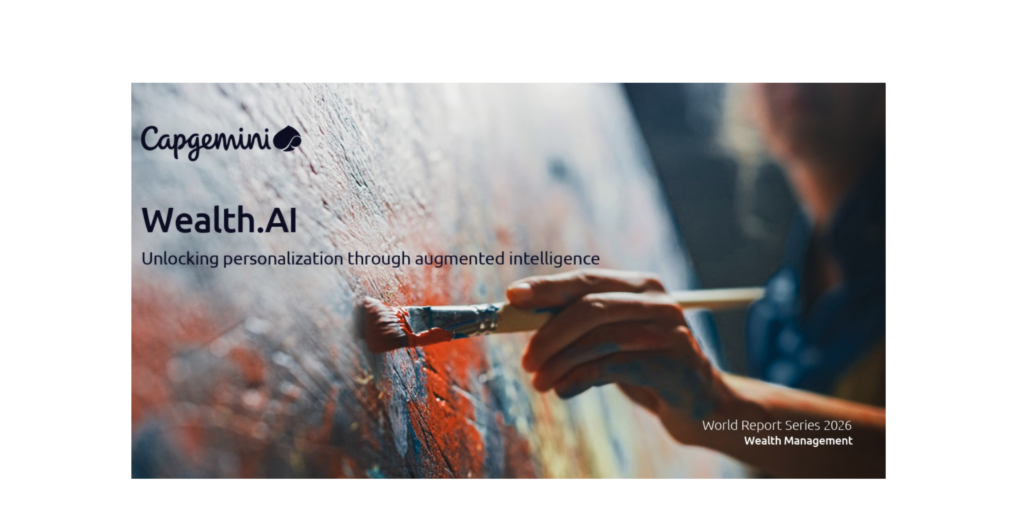
What the Capgemini World Wealth Report 2026 tells us about the industry’s real challenges.
Global high-net-worth individual (HNWI) wealth reached USD 98.3 trillion in 2025, up 8.7% year on year. Europe rebounded sharply: HNWI wealth grew 8%, the population grew 6.5%. And the segment that defines the industry’s commercial heartland; the so-called Millionaires Next Door, HNWIs with USD 1M to 5M in assets; now represents 89.7% of the HNWI population and 42.5% of total HNWI wealth.
Nevertheless, the Capgemini World Wealth Report 2026 delivers a verdict the industry cannot ignore: traditional firms collectively lost USD 1.5 trillion in client assets to competitors between 2022 and 2025. Incumbent players struggle to meet HNWIs expectations, as clients increasingly spread their assets across multiple advisory firms.
According to Capgemini, only 17% of interviewed clients report that their advisory experience has been seamless and personalized. Nearly half, 42%, say they have to restate their preferences regularly, even to their own RM. “As client expectations continue to shift toward more digital, seamless, and highly personalized experiences, traditional segmentation approaches, largely based on assets under management (AUM) tiers and static risk profiles, are showing their limits.”
97% of wealth management firms still segment clients by AUM band. 78% rely on static risk profiles. But the Millionaires Next Door segment, the 89.7% majority, is composed of entrepreneurs, dual-income professionals, and inheritors with radically different financial goals, risk behaviors, and service expectations. A uniform advisory model applied to a heterogeneous population is not personalized.
Meanwhile, clients are seeking specialized providers who can serve specific needs that their primary institution cannot, like access to alternative investments, tax optimization strategies, digital asset management or simply a flowless digital experience.
The relationship manager sits at the center of every wealth management firm’s value proposition. Yet according to the report, 41% of RM time is consumed by operational tasks such as CRM updates, compliance documentation, internal coordination or reporting. Less than three hours in five are spent on what actually creates value: understanding the client, anticipating their needs, and delivering advice.
This is not a productivity problem. It is a structural misalignment. The RM is still expected to be analyst, administrator, and trusted advisor simultaneously. The cognitive load is unsustainable, and the quality of client interaction pays the price.
The report is explicit about the direction of travel. The future model is augmented intelligence. The RM remains the orchestrator of the client relationship but is supported by an intelligence layer that surfaces insights, prepares for client conversations, automates routine tasks, and translates complex portfolio data into actionable, client-ready narratives. The shift is from product-selling to personalized, empathetic advice and that shift requires infrastructure that most firms have not yet built.
Capgemini’s framework for the next phase of wealth management rests on three interconnected pillars: broadening the range of products and services accessible to clients, supercharging the RM with intelligent tools, and building the enabling intelligence layer that connects data to decision.
None of these pillars works in isolation. Broader product access without an RM equipped to contextualize it creates noise, not value. Intelligent tools without a unified data and analytics foundation generate fragmented insights. And an intelligence layer disconnected from the client relationship becomes a back-office asset, not a front-office advantage.
The architecture must connect all three and it must do so at scale. Not for the top 1% of ultra-high-net-worth clients, but for the 89.7% Millionaires Next Door who represent the industry’s growth engine and currently receive the least differentiated service.
Putting the client at the heart of the relationship is exactly why we founded SOPIAD.
SAFIR, Sopiad’s platform, operationalizes personalization at scale by connecting each client’s profile (goals, constraints, preferences, behaviour) to portfolio analytics and RM insights in real time. Based on a visual Portfolio-adequacy rating, SAFIR enables the RM to offer the optimal asset allocation to his client, monitor portfolio drifts, engage with him proactively.
He also benefits from our AI agents to prepare meetings and get answers for his client in real-time. It reduces operational burden, fosters personalized discussions and enables high-value advisory conversations. As it gives the RM the intelligence layer the report calls for, it provides actionable insights, client-ready narratives and proactive alerts that make every interaction more relevant.
The Capgemini report names the challenge, ….SOPIAD is a part of the solution. The firms that will retain and grow wallet share over the next five years are those who provide their RMs with augmented intelligence to deliver personalized advice at scale. We can help!
Sources: Based Capgemini World Wealth Report 2026: Wealth.AI